
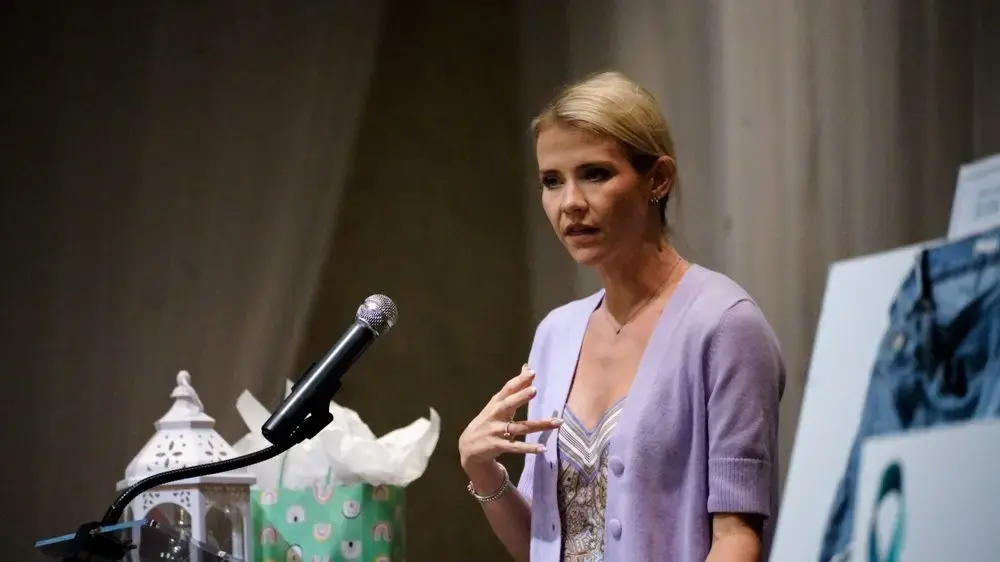
More than 500 people filled the Bruce Convention Center Thursday night for a Sexual Assault Awareness Month finale event featuring nationally known advocate Elizabeth Smart, who delivered a message centered on resilience, healing and community support for survivors.
The event, hosted by Sanctuary Inc., capped a month of awareness activities across the region, drawing one of the largest crowds the organization has seen for its annual programming.
Smart, who was abducted in 2002 at age 14 from her home in Salt Lake City and held captive for nine months before being rescued in 2003, has since become a national advocate for survivors of sexual violence. She was kidnapped at knifepoint from her bedroom and later subjected to repeated abuse during captivity before being recovered after being recognized in public by citizens who had seen news reports about her disappearance.
While her case drew national attention and remains one of the most widely reported child abduction cases in modern U.S. history, Smart told the Hopkinsville audience she intentionally focused less on the details of trauma and more on what comes after it.
Smart built her opening remarks around the idea that life rarely follows a straight path and that unexpected events can reshape a person’s understanding of themselves and the world.
“I don’t think I’ve ever met anybody whose life goes exactly the way that they plan it,” she said.
She compared major life disruptions to smaller daily challenges, saying both can derail expectations in different ways, before turning to the broader impact of trauma.
“I don’t know anyone who hasn’t experienced some form of trauma,” she said, describing what she called a “window” of tolerance people carry that can expand or shrink depending on life experiences.
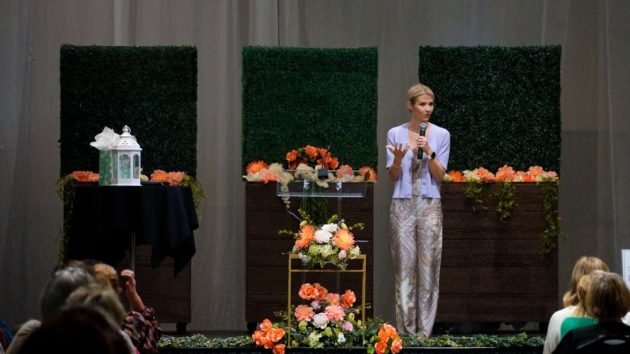
Smart said her own experiences reinforced that trauma does not affect every moment of life in the same way.
“I went through my kidnapping, and yes, that was traumatic. It was a big deal. I’m not belittling it. It was a huge deal,” she said. “However, my parents divorced a few years ago, and that felt like the hardest thing in the world for me.”
She said her reaction to different events taught her that healing is not linear.
“I went to therapy for that, and I didn’t go to therapy for my kidnapping, so that felt, that felt so hard,” Smart said. “Healing is not just like smooth, straightforward… it’s like a roller coaster. It’s not just like a straight trajectory.”
After Smart shared the story of her abduction and rescue, she answered questions submitted from attendees. One question asked about how individuals and communities can respond to survivors of sexual violence.
She cautioned against asking questions that begin with “why didn’t you,” saying those questions can feel like blame rather than curiosity.
“You might be asking it purely from a curiosity point of view, but I never heard it as curiosity. I heard it as blame,” she said.
Instead, Smart encouraged people to offer consistent, practical support.
She also shared that support does not always need to involve direct intervention in legal or medical processes.
“If you just want a pal to talk to… happy to talk about that. You want to go for ice cream? Great, let’s do it,” she said. “Just being a friend, staying with them.”
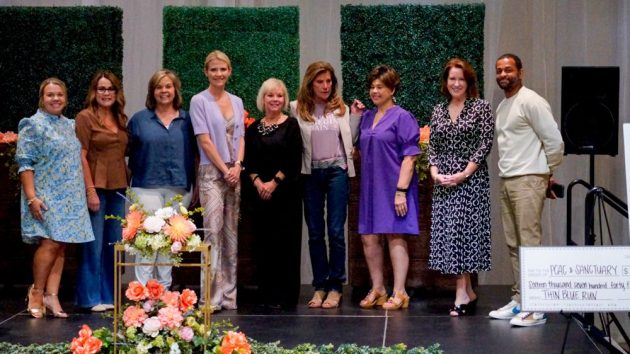
Sanctuary Inc. Board Chair Tracey Clark said the organization was overwhelmed by community participation throughout the month and especially Thursday night.
Clark said Smart’s message carried particular weight because it came from lived experience.
Clark also reminded attendees that crisis services remain available at all times.
The event comes amid ongoing national concern about sexual violence. According to the Rape, Abuse & Incest National Network (RAINN), an American is sexually assaulted approximately every 68 seconds, and nearly 1 in 5 women in the U.S. report experiencing rape or attempted rape in their lifetime. Survivors are significantly less likely to report assaults when they do not receive support from friends, family, or law enforcement.
Advocates say events like Thursday’s are intended to improve awareness and community response, particularly in rural areas where resources can be limited.
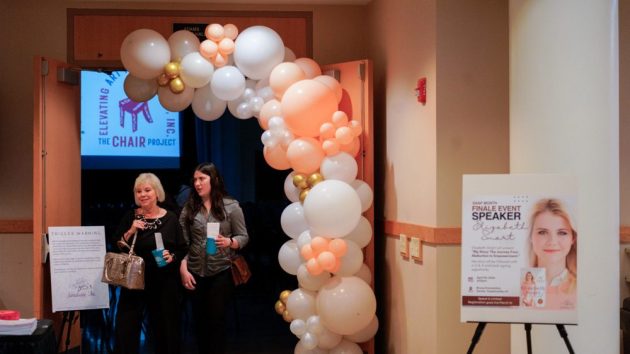
Smart closed her remarks by thanking the audience for showing up in support of survivors and organizations working in the field.
“I just want to say thank you so much for having me here tonight,” she said. “Never stop trying. Never stop living, because everybody deserves to have happiness in their life.”
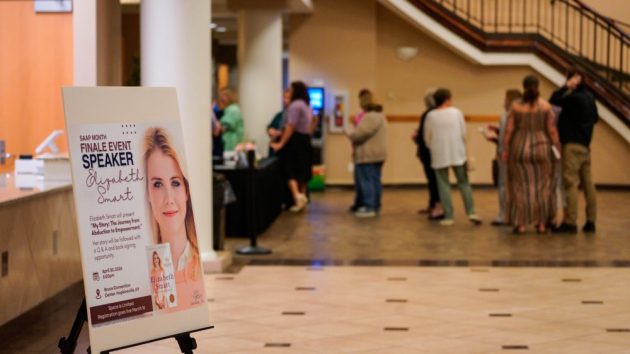
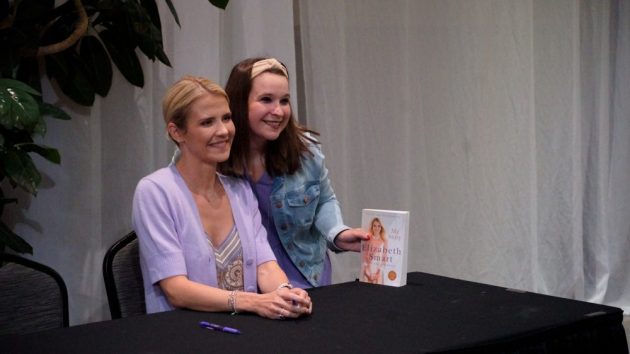
Following the program, attendees lined up for a book signing, where Smart met with audience members one-on-one, signed copies of her work, and spoke briefly with attendees in a more informal setting.
For many, the evening served as both a community gathering and a reminder of the long-term impact of trauma—and the ongoing work of recovery.